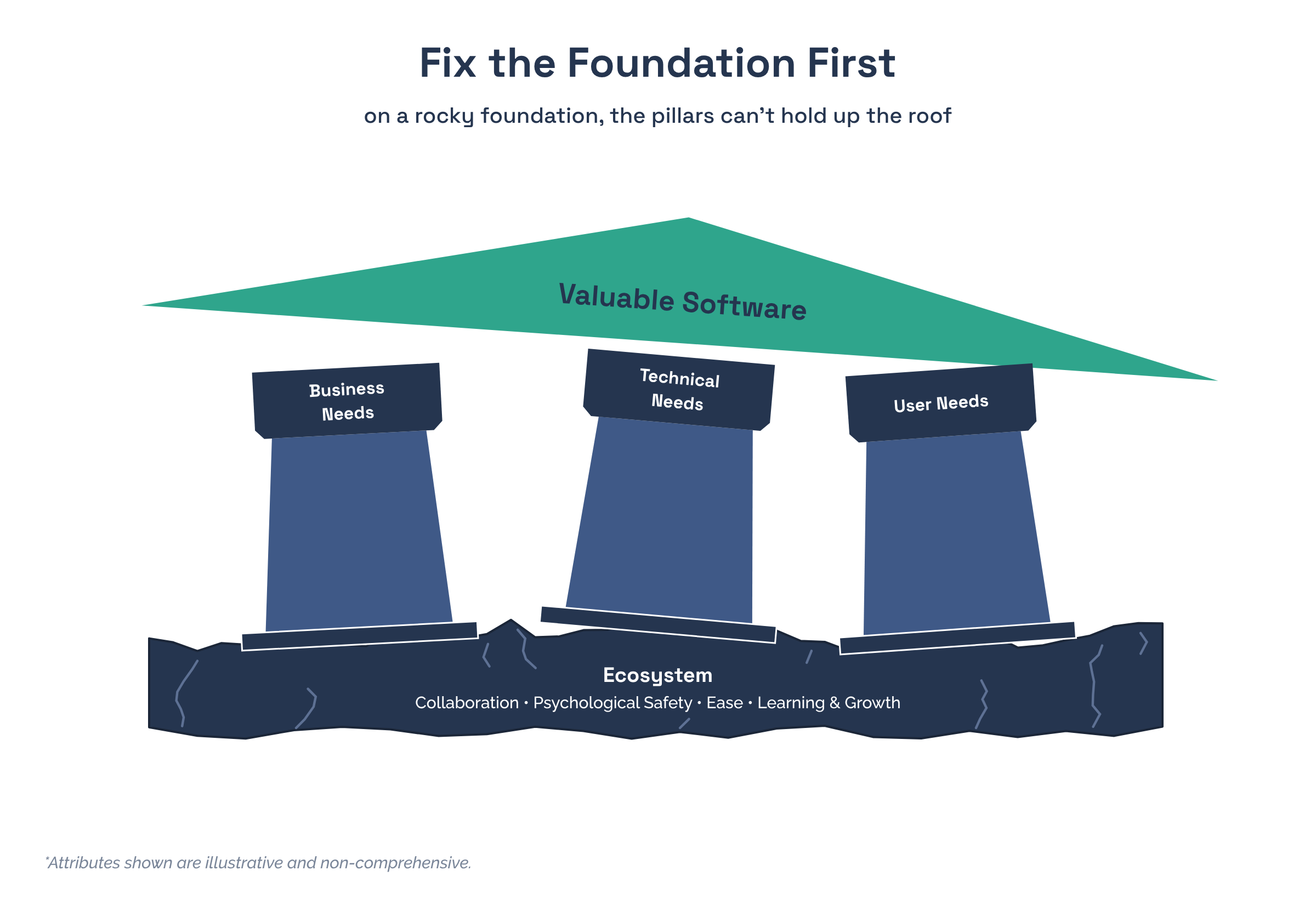
In most R&D organizations, each function is responsible for advocating for a perspective. Product advocates for the Business needs. Engineering advocates for the Technical needs. UX advocates for the User needs.
Then there's everything that sits between them, which no title usually covers: how the functions plan together, how they make tradeoffs, how they find out something is off course.
When I created the House of Software Value Delivery, I identified that space as the foundation everything else rests on: a well-functioning ecosystem. Its Attributes are things like Collaboration, Continuous Improvement, Ease, and Learning & Growth. It's the layer that often gets forgotten, and it's the one that stitches the organization together.
I once took over a group of teams whose roadmap was fully built out, with new functionality promised for release each quarter. Product had built it, and none of it came from the teams doing the work. Every product manager owned a slice, every engineering manager owned a backlog, and nobody was looking at how it all fit together. My instinct was that there was no chance of us meeting it.
Two foundation Attributes were weak. Collaboration: the functions weren't planning together. And Psychological Safety: nobody felt comfortable giving an accurate estimate, because an accurate estimate didn't match the published roadmap.
So we changed how the roadmap got built. We inventoried every thread of work, sorted out the dependencies and sequencing, and rebuilt the roadmap around what the teams could actually deliver. We built trust by using the information the teams gave us, instead of making promises without their input. Afterward, everyone knew what they were working on, what it would take, and how long it would take.
I like the foundation problems. I like working across functions and across levels. I like digging down to the root causes that keep an organization from growing, especially the ones that don't belong to anyone's title. The House is how I find them.